

 Monday - Sunday - Open 24 hours


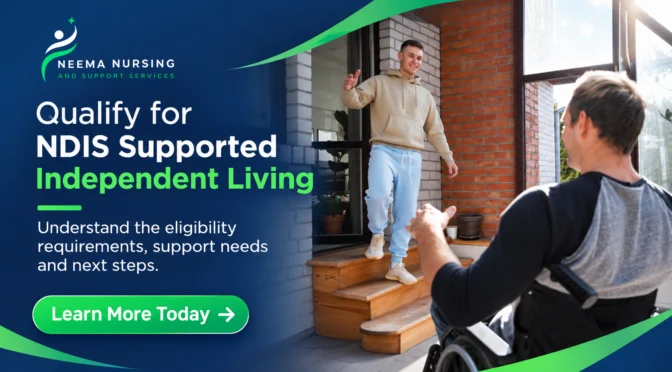
Living independently looks different for everyone. For some people with disabilities, the right assistance can make everyday routines more manageable while supporting greater choice, confidence and independence. NDIS supported independent living (SIL) may help eligible participants access assistance with daily activities at home. Understanding the eligibility criteria, required evidence and funding process is an important first step. At Neema Nursing and Support Services, we recognise the importance of finding support that reflects each participant’s individual needs and goals.
What Does Supported Independent Living Include?
Imagine having the right support to manage everyday routines while building skills at your own pace. Supported independent living can provide assistance with activities such as:
- Personal care, dressing and daily routines.
- Meal preparation and household tasks.
- Developing practical living skills.
- Supervision and assistance based on assessed needs.
- Working towards greater independence at home.
SIL funding covers eligible support services rather than ordinary living expenses, such as rent, groceries and electricity.
Who Is Eligible For NDIS SIL?
Eligibility for Supported Independent Living (SIL) depends on your individual circumstances, disability-related support needs and the National Disability Insurance Agency’s (NDIA) assessment.
You may be considered for SIL if you:
- Require ongoing assistance with daily living activities.
- Need regular supervision or support to maintain safety and wellbeing.
- Have substantial support needs that affect independent living.
- Would benefit from structured assistance aligned with your personal goals.
When considering an NDIS SIL service Melbourne, understanding your functional needs, current living arrangements and long-term goals can help you explore appropriate support options..
What Evidence Do You Need To Support Your Application?
A strong application clearly explains how your disability affects daily life and why particular support arrangements may be appropriate.
Useful evidence may include:
- Occupational therapy assessments describing functional abilities.
- Reports from relevant health professionals.
- Details of personal care and supervision requirements.
- Information about current living arrangements and gaps in support.
- Personal goals explaining the outcomes you want to achieve.
A diagnosis alone may not establish eligibility. Evidence should demonstrate your actual daily support requirements and explain how the proposed assistance relates to your needs.
How Do You Apply For SIL Funding?
Preparing in advance can make the process easier to navigate.
Step 1: Identify your support needs. List the daily activities where you need assistance and the goals you want to achieve.
Step 2: Gather relevant evidence. Collect assessments, reports and information about your current arrangements.
Step 3: Explore home and living options. Discuss your circumstances with your NDIS planner or Local Area Coordinator.
Step 4: Follow the applicable process. Provide the required information for your circumstances and funding request.
Step 5: Review the outcome. Understand the decision and ask about available review options if your request is declined.
The NDIA makes the final funding decision. Preparing relevant evidence can help explain your circumstances but cannot guarantee approval.
What Should You Know About Current NDIS SIL Requirements?
NDIS requirements can change, so participants should stay informed about the rules that apply when arranging support. From 1 July 2026, new SIL provider registration and claiming requirements came into effect, including updated support item codes and provider eligibility conditions. The NDIA also published an updated Supported Independent Living (SIL) operational guideline on 1 October 2026, providing further clarification on SIL eligibility, decision-making and mandatory provider registration.
These changes make it important for participants to understand the new SIL registration and claiming requirements and confirm their provider’s registration status before entering into service arrangements.
What If You Do Not Qualify for SIL?
A decision that SIL is not suitable does not necessarily mean you cannot access other assistance. Depending on your assessed needs and plan, alternatives may include personal care support, individual support worker visits, capacity-building supports or Individualised Living Options.
Discuss your circumstances with your NDIS contact to understand which options may be appropriate and whether further evidence or a review of the decision is warranted.
How Do You Choose The Right Home And Support Provider?
When exploring SIL homes, consider accessibility, privacy, compatibility with housemates, staff availability and opportunities to develop everyday skills.
Choosing an NDIS SIL service also involves understanding service agreements, safeguarding procedures, communication practices and how support is tailored to personal goals.
For those exploring supported independent living Melbourne, it is important to assess each service against individual requirements rather than choosing accommodation based on appearance alone.
Final Thoughts
Qualifying for NDIS supported independent living involves understanding your support needs, preparing relevant evidence and meeting the applicable NDIS funding requirements. With informed planning, participants and families can explore suitable living arrangements and make confident decisions about their future. At Neema Nursing and Support Services, our focus is on helping people explore support options that respect their individual goals, choices and independence.
Need Help Understanding Your SIL Options?
Looking for guidance on your home and living support options? Neema Nursing and Support Services can help you discuss your circumstances and explore suitable assistance. Call 411128700 or email hello@neemanursing.com.au to enquire about available services and the next steps towards greater independence.
Frequently Asked Questions
Can I Access SIL If I Currently Live With My Family?
Yes, you may be eligible for SIL while living with family. We recognise that every participant has different support needs, which the NDIA considers when assessing eligibility.
Does NDIS SIL Funding Cover Rent And Groceries?
No. SIL funding generally covers eligible daily living support, while rent, groceries and other everyday living expenses are separate. Understanding this distinction can help you plan your living arrangements.
Can I Choose Who I Live With In A SIL Home?
Your preferences and compatibility with potential housemates are important considerations. A suitable living arrangement should respect your privacy, lifestyle choices and individual support needs.
Does NDIS Approval Automatically Qualify Me For SIL?
No. NDIS participation does not guarantee SIL funding. The NDIA assesses whether SIL is appropriate based on your disability-related support needs and applicable funding criteria.
Can My SIL Support Change If My Needs Increase?
Support arrangements may be reviewed when your circumstances change. The appropriate process depends on your situation, evidence of your needs and the applicable NDIS requirements.
Does SIL Always Include Overnight Support?
No. Overnight assistance depends on individual support requirements and approved arrangements. The type and level of support are determined according to assessed needs and applicable NDIS funding decisions.
What Should I Consider When Choosing A SIL Provider?
Look for appropriate provider registration, reliable staffing, clear service agreements, safeguarding practices and support tailored to your goals. At Neema Nursing and Support Services, we believe that understanding your individual preferences is essential when exploring suitable living arrangements.
